
Never throw away
Bulletins from a French butcher's shop

At about the time I first started working in France as a foreign correspondent, a young woman my age was beginning to make waves with a series of provocative stunts that either thrilled, baffled or appalled (sometimes all three simultaneously) many in the European art world of the late 1970s and early 1980s.
Wikipedia records that on one of Sophie Calle’s earliest forays into wacky exhibitionism – her Suite Venitienne (1979) – the daring young Frenchwoman “followed a man she met at a party in Paris to Venice, where she disguised herself and followed him around the city, photographing him”.
A couple of years later she took a job as a chambermaid in a Venice hotel, where she rifled through the belongings of guests, photographing them and making notes about their behaviour before putting the results on show.
In 1983 she found an address book on the street and set about calling the phone numbers it contained to find out more about its owner. When Calle published her conclusions, the owner threatened to sue her for invading his private life.
The true meaning of all this was anybody’s guess, but almost half a century later, Sophie Calle is still at it, her fertile imagination undimmed by her steady transformation from enfant terrible of conceptual art to grande dame of big ideas.


I found her, unexpectedly, in Arles, where I arrived last weekend to immerse myself in the city’s annual photography festival. Over the next three days, I saw 24 exhibitions at 18 different venues, among them an archbishop’s palace, a railway shed, a Monoprix supermarket, several churches, the National School of Photography, a disused garage and a dank subterranean crypt.
It was in the last of these that I found Ms Calle and I have to say, that soon-to-be 71-year-old agent provocateur once again curdled my cranium. I can’t remember hearing of her for years, yet here was a show so instantly compelling, so manically different, so thrillingly weird, that the decades fell away and I became once again Sophie’s gobsmacked English fanboy (without, as before, ever really understanding why).
Let me begin by describing the crypt. It’s actually a series of low galleries built below what used to be the city’s Roman Forum (Arles also boasts a handsomely preserved Roman amphitheatre, a circle of walls and numerous other traces of marauding Roman emperors). The crypt is dark and way too damp for regular use; Arles is built on the soggy soil that a few miles to the south turns into the marshes of the Camargue. There are puddles all over the rocky floor and green mould consuming the walls, some of which are dimly lit by street-level portholes caked in filth.
In short, it’s really not the first place you’d think of to mount an exhibition of photographs, or any other perishable items. Unless, of course, you’re Sophie Calle.
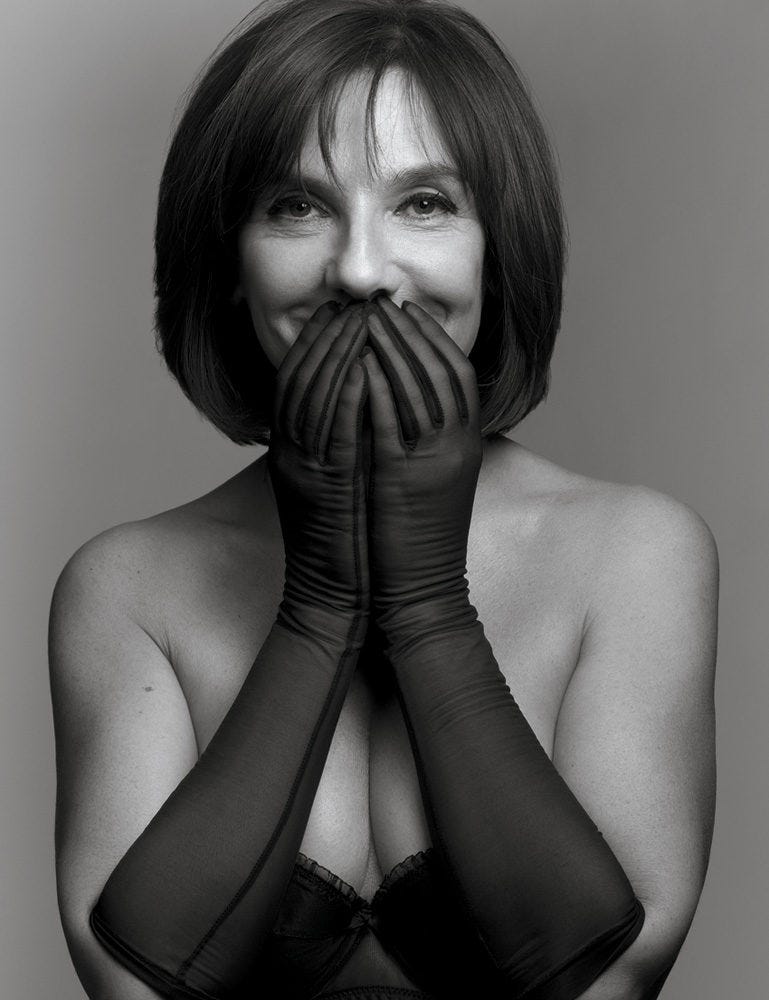
Photo of Sophie Calle by Craig McDean/Interview Magazine/2009
She has written her own introduction to her underground exhibition. Some of it may even be true. What the hell, it’s a brilliant story.
In 1986 Calle produced a more conventional piece of work, albeit with her trademark twist. She made photographic portraits of a group of people who had been blind since birth. At the same time she asked them how they imagined beauty, what they thought beautiful things might look like. One young boy told her that he thought green was beautiful because every time he said he liked something he would be told it was green.
The original work was well-received, but shifting social attitudes towards the portrayal of disabilities have since prompted criticisms of Calle’s approach – her photographs are not flattering and there were accusations of exploitation for her own ends. That debate doesn’t really apply in Arles for reasons that will become clear.
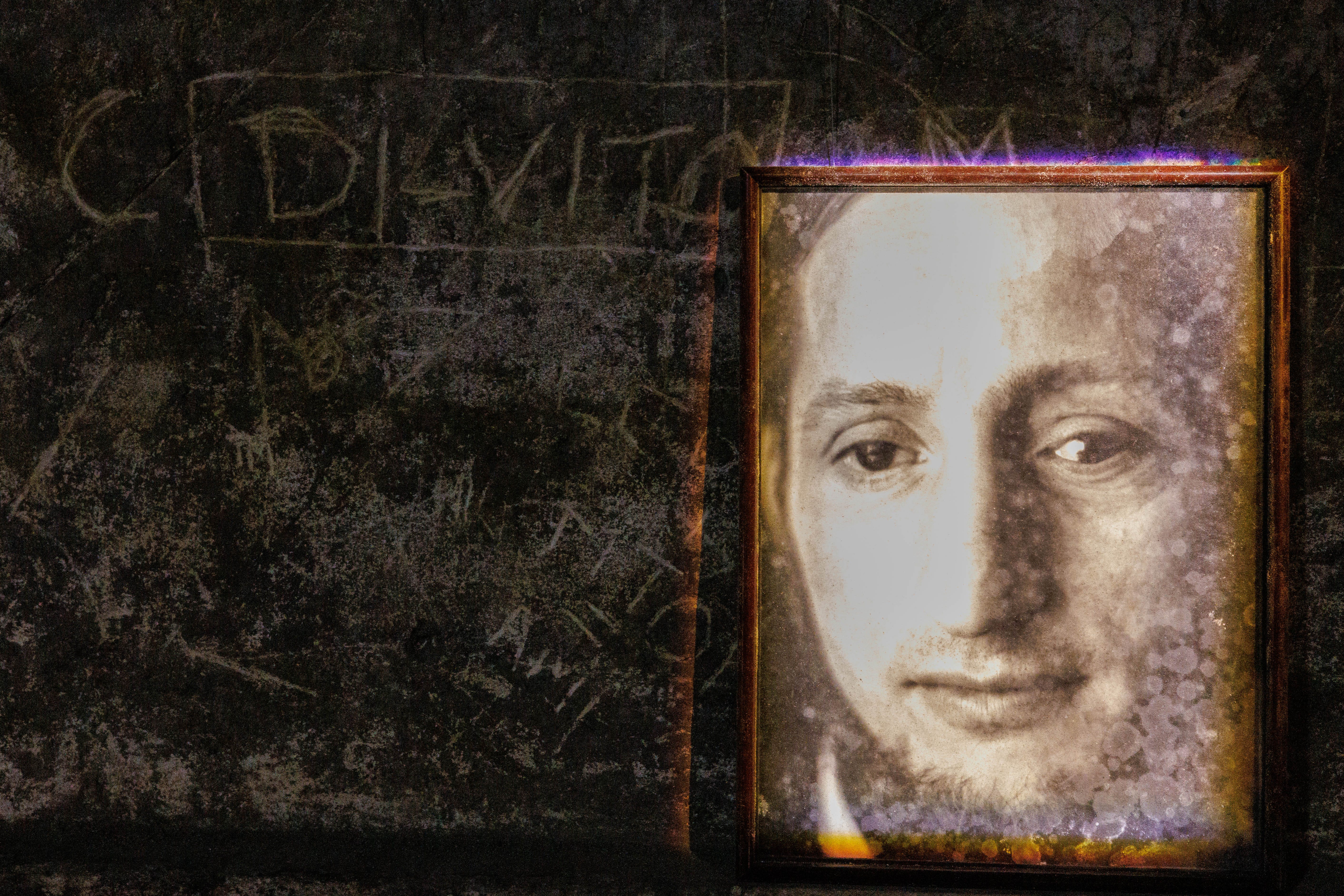
Calle was among the artists invited to participate in a group show at the Musée Picasso in Paris last year, to mark the centenary of Pablo’s death. She had intended to include a selection of her portraits of the blind. But a storm damaged the storeroom where the portraits were kept and mould spores began to appear on the photographic prints and their frames. Her restorers were worried about further contamination and recommended she destroy the irreparable work.
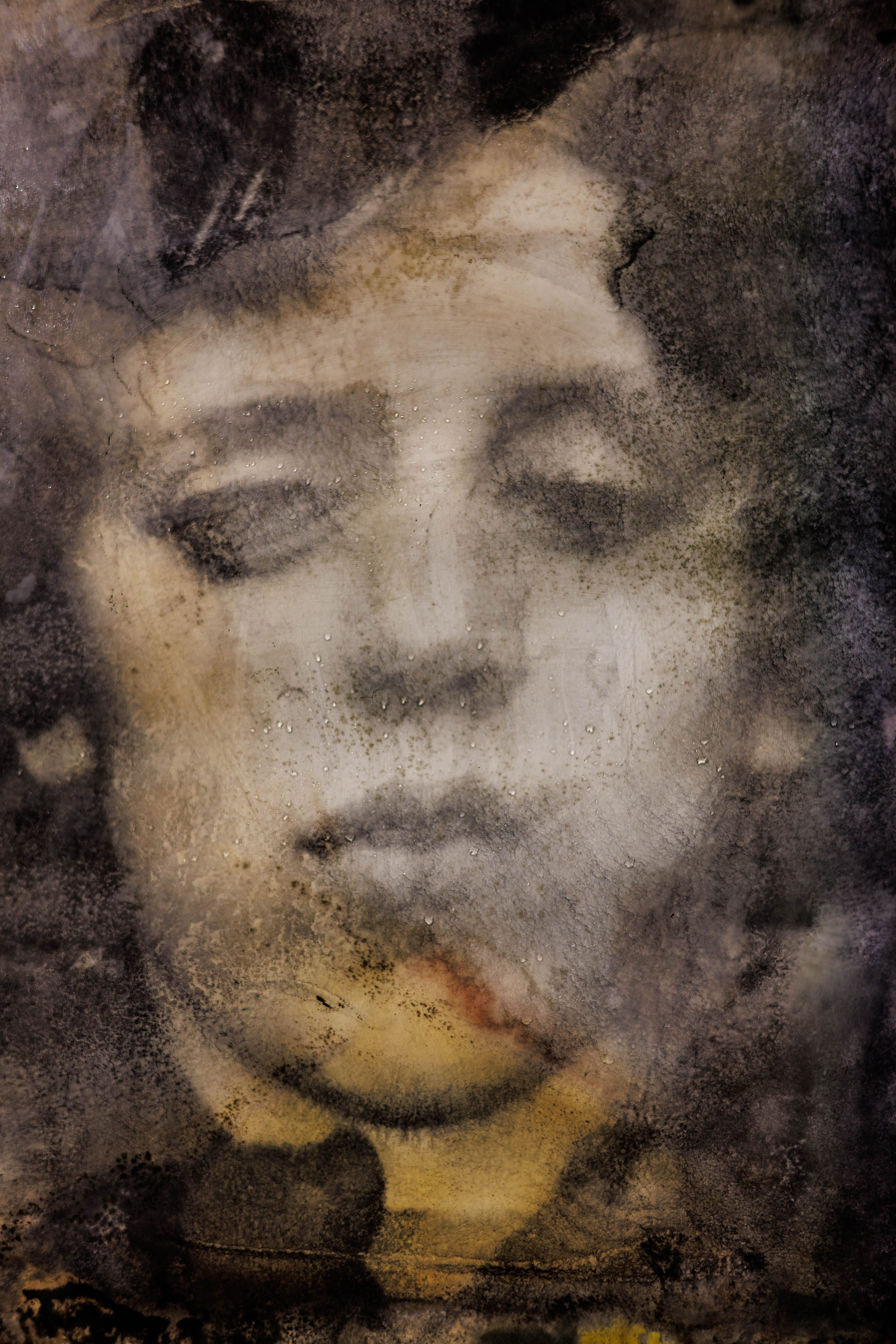
Well, you can probably guess the rest. Calle refused to destroy her mouldy pictures. She decided to display them instead. She remembered that Arles had previous fungal problems with the Roman crypt – its voracious humidity had ravaged a previous exhibition. For Calle it was the perfect match: her rotting photographs could fester in public. She entitled her project “Finir en beauté – ni donner, ni jeter”: End in beauty – neither give away, nor throw away.
Her ruined pictures are now displayed on ledges and in alcoves throughout the galleries. Typically, she has thrown in several other random objects that have nothing to do with the blind: “things from my life that I no longer had any use for but that I could bring myself to neither give nor throw away”.
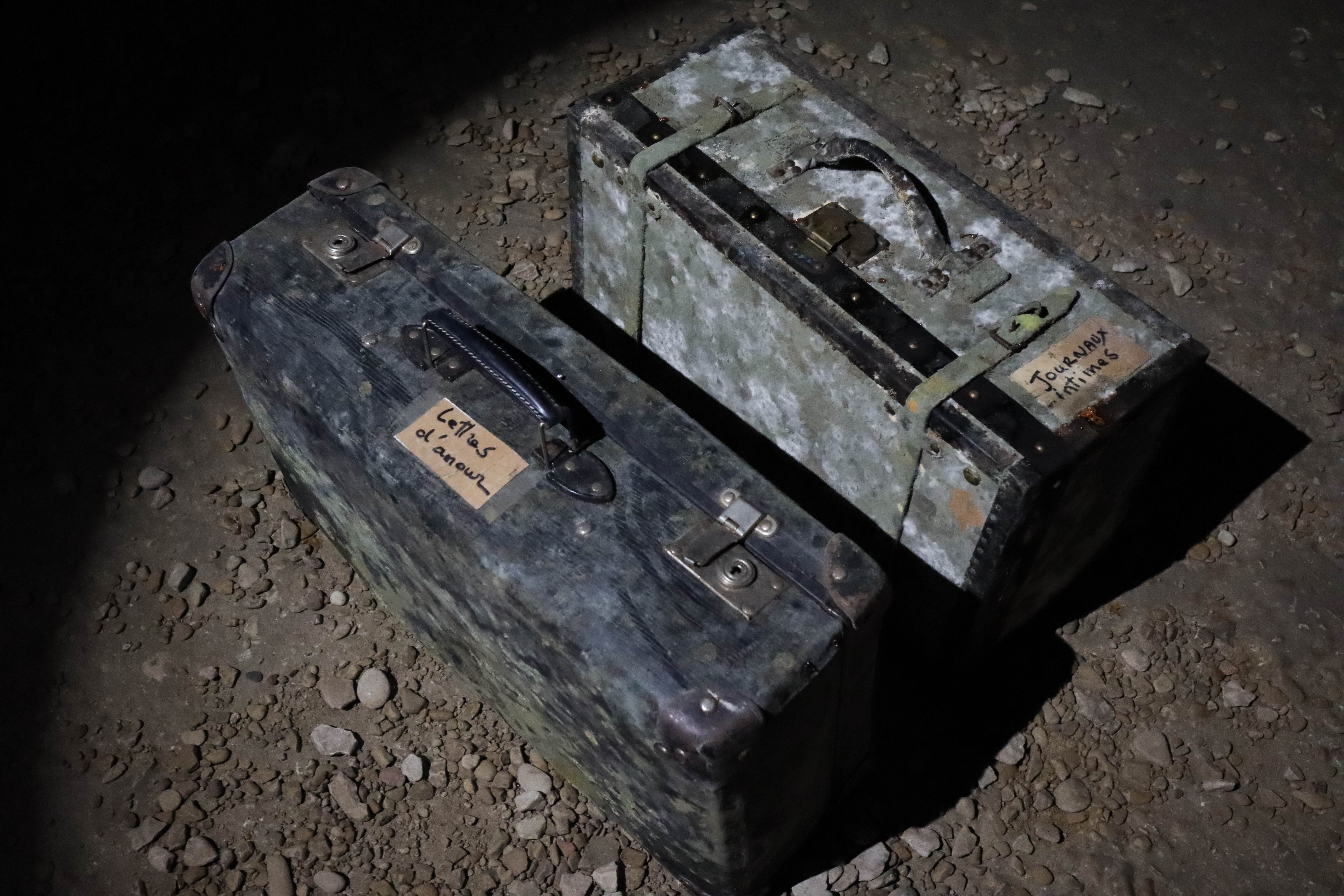
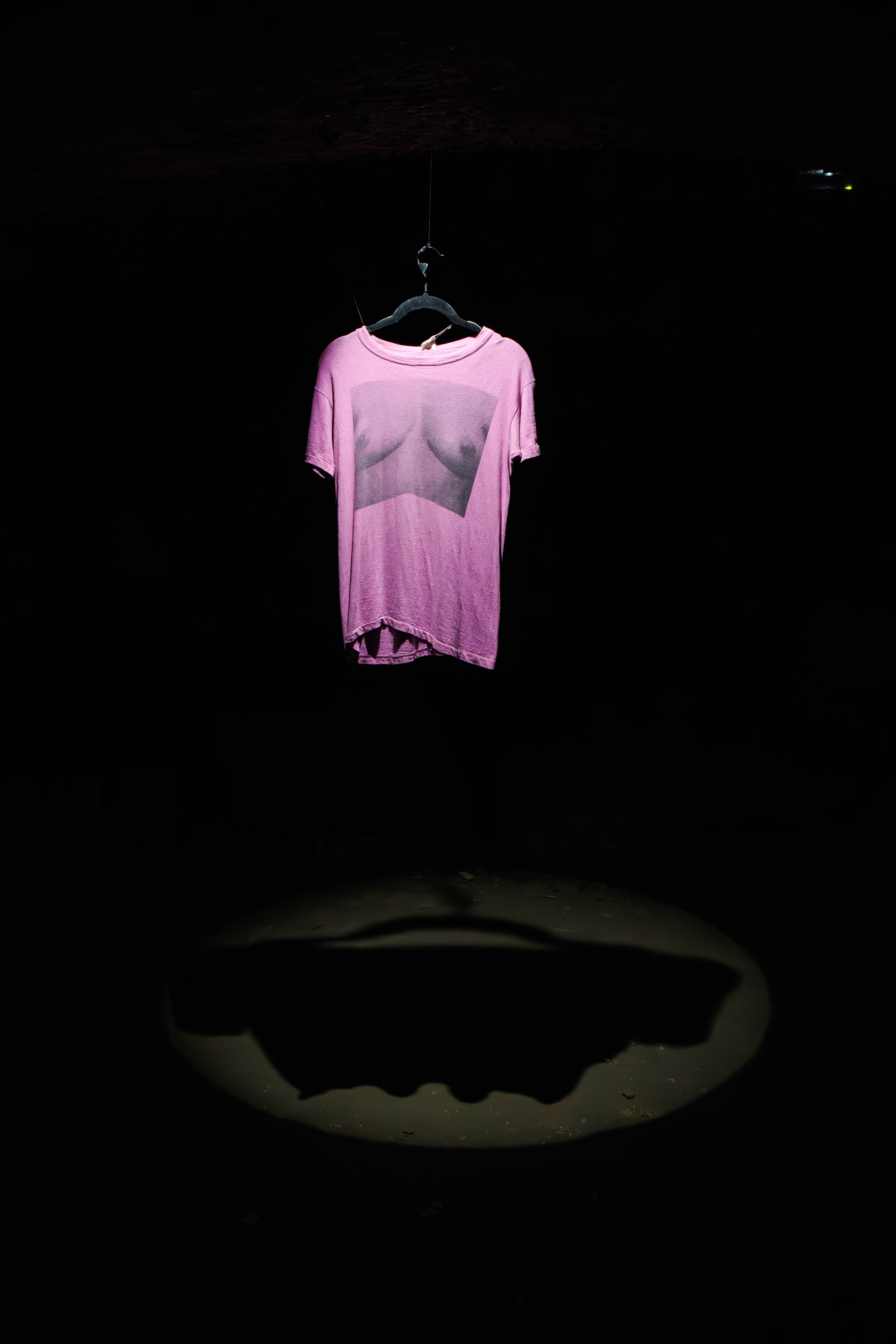
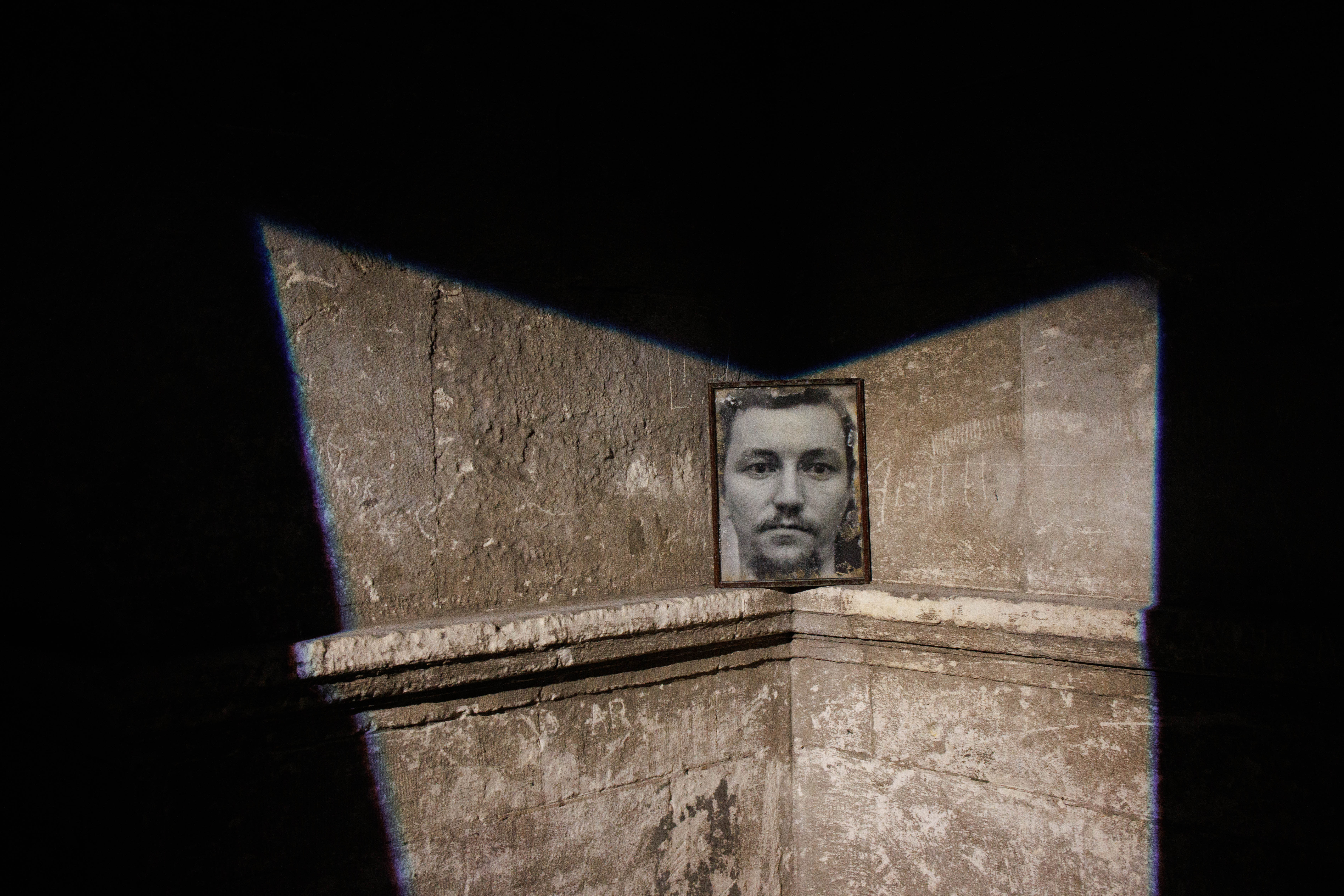
So that’s how I came to be carefully dodging the puddles in the murk of a Roman crypt, staring for long moments at a red shoe on a Roman boulder; a pair of naked breasts on a pink T-shirt hanging from an overhead pipe; a pair of battered old suitcases labelled “lettres d’amour” (love letters) and “journaux intimes” (intimate journals); a white dress that belonged to Calle’s mother. And every few yards, artfully lit by small spotlights, those portraits of unseeing eyes, smudged and stained by the advancing decay that will ultimately consume them.
There’s probably a message in there, somewhere.