
"Take the bikinis...."
Bulletins from a French butcher's shop

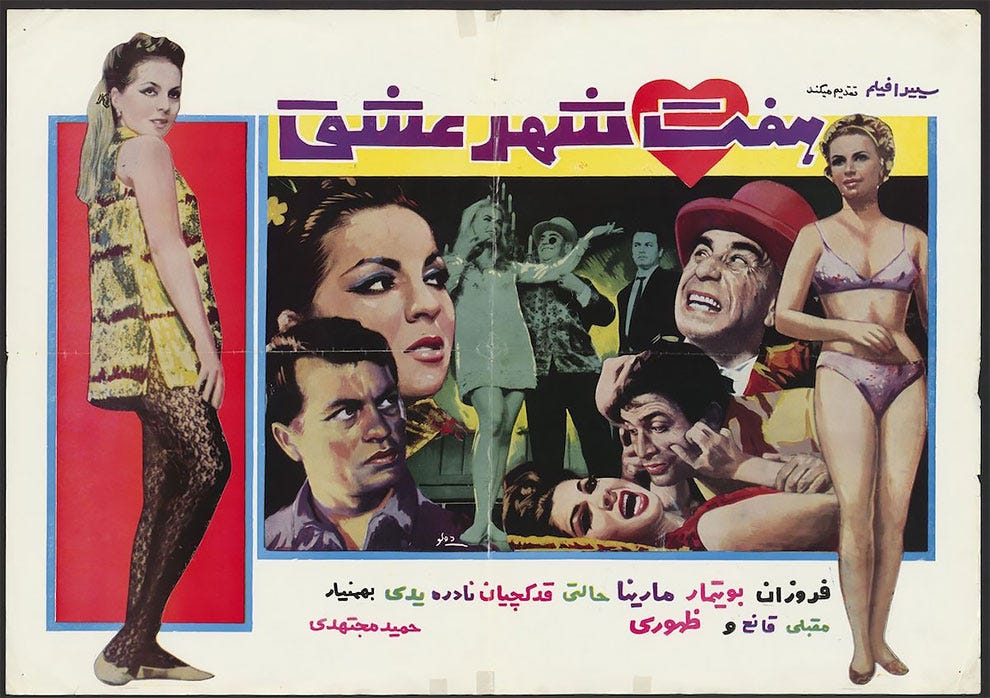
Illustration: An Iranian film poster, pre-revolution
I spent an unhealthy proportion of my professional life as a foreign correspondent bowing to the whims of deranged editors who suddenly came up with what they, alone, considered a bright idea.
Here’s an early example. In late March 1979, I was dispatched to Nairobi to report on the death throes of the Ugandan regime led by Idi Amin, the former army cook who had risen through British colonial ranks to stage a coup, install himself as president and ultimately ugrade his title (a little prematurely, as it turned out) to both “King of Scotland” and “Conqueror of the British Empire”. Amin’s forces were under siege from an invading Tanzanian army.
Almost two months later, I was back in Nairobi after an hallucinogenic odyssey around Eastern Africa. I fought off swarming cockroaches in a Dar-es-Salaam hotel room; joined Tanzanian troops as they celebrated victory in Kampala; narrowly escaped death at the hands of a drunken Tanzanian soldier who stumbled down the marble staircase of Kampala’s Intercontinental hotel while clutching a loaded grenade launcher; narrowly escaped death again when a light aircraft carrying half a dozen journalists crash-landed on an escarpment above the Rift Valley; narrowly escaped death a third time when a drug-crazed Tanzanian brigadier took offence at a question asked by an Associated Press reporter and threatened to have all of us shot; and narrowly escaped death a fourth time when I foolishly took advantage of a day off in Nairobi to drive north to have lunch with an old university friend who was conducting a study of baboon migration in a wild corner of the Kenyan bush (I’m sorry about these stories. They get out of hand).
We never had that lunch; I lost control of my rental car on a dirt track, rolled it onto its roof and was forced to abandon it, upside down, by the side of the road. I was wandering deliriously along the track when an elderly Italian rancher passed me in his pickup. He stopped and drove me back to Nairobi, one hand on his rifle and the other on the knee of the attractive young African girl sat between us (no I don’t know how he was steering the truck. I was badly concussed).
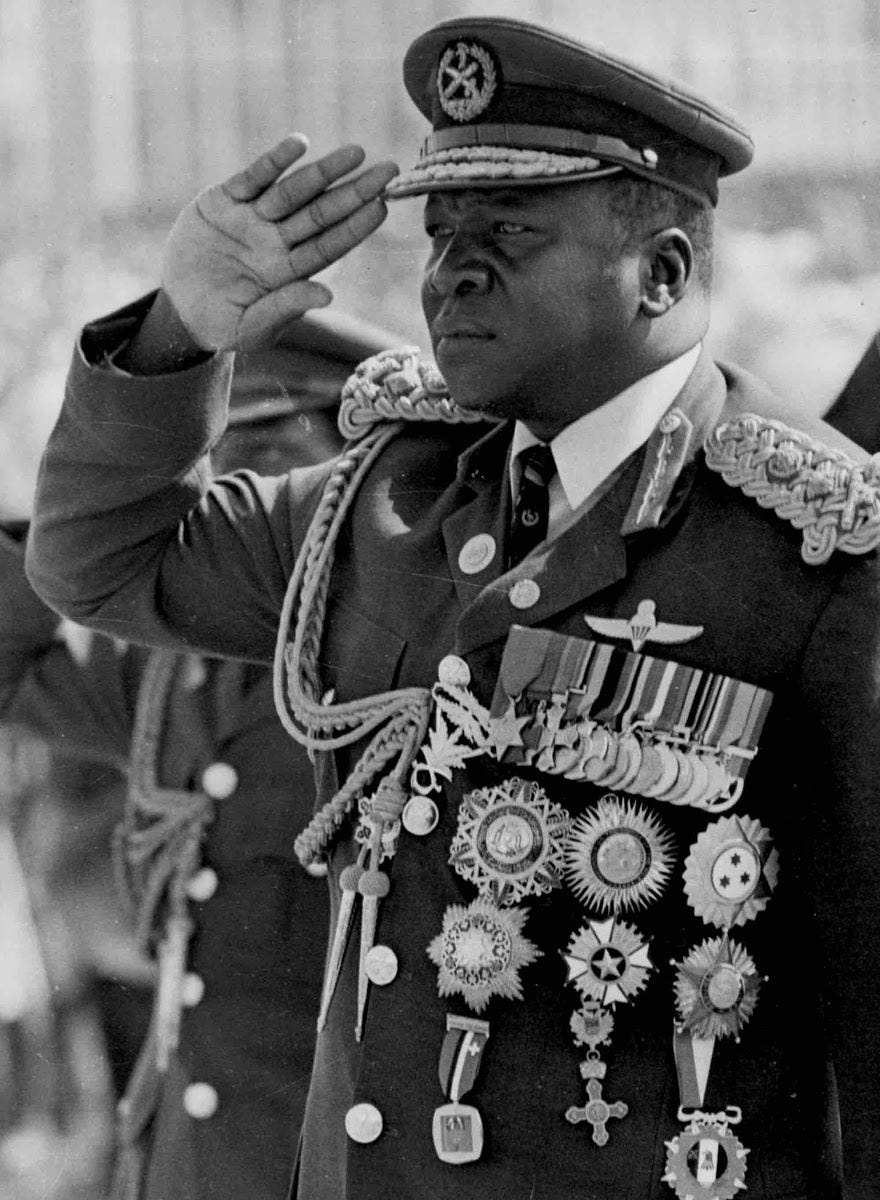
Photo: The self-proclaimed King of Scotland with some of the medals he awarded himself.
In short, by then I was desperate to be home. Amin had fled (to a comfortable exile in Saudi Arabia, it would later turn out). The brutalities of his insane regime had been thoroughly exposed. Through the concussive fog that shrouded my brain, I dimly remembered that I had a wife and two cats in Cambridge who might be wondering where I’d got to, after two months away. And that’s when the phone rang in my hotel room.
“Dear boy, how are you?” enquired my editor. But enough with the pleasantries. “Our man in Tehran needs to leave,” quoth he. “But the Iranian Revolution continues. You can get there tomorrow via Frankfurt if you leave Nairobi tonight”. And sure enough, three days after that call, The Daily Telegraph published my first story from post-revolutionary Iran: “Teheran court orders: ‘Kill the Shah’.” The wife and cats would have to wait.
Why am I telling you all this today? Well, the first reason is obvious. The dizzying parade of Trumpian distraction has reached full circle (you will recall that the King of Several Scottish Golf Courses previously bombed Iran to stop us talking about Epstein. Then he invaded Minnesota to stop us talking about Epstein; neither Minnesota nor Epstein have gone away, so now he’s threatening to bomb Iran (again).
I spent nearly a month in Tehran on that first visit, and became utterly absorbed by the quickening pace of the Islamic takeover. One of the last stories I wrote before my return to London was headlined “Iran’s Revolution Hardening into Dictatorship; Euphoria turns sour as grip of Islam is tightened”.
So when my editors asked me, three months later, to return to Tehran amid increasing signs of a clampdown on western media, I leaped at the chance; little knowing that it would lead to the first great disaster* of my journalistic career and, decades later, to the second reason I’m telling you all this today. Ayatollah Khomeini and Donald Trump! Ideological twins separated at birth?
OK, I’m not going to labour the point about the glaring similarities between Iranian security forces breaking up anti-regime protests with clouds of tear gas and vicious beatings; and federal US agents breaking up Minnesota’s anti-regime protests with clouds of tear gas and vicious beatings. Obviously the Iranian repression has been on a much more violent and murderous scale.
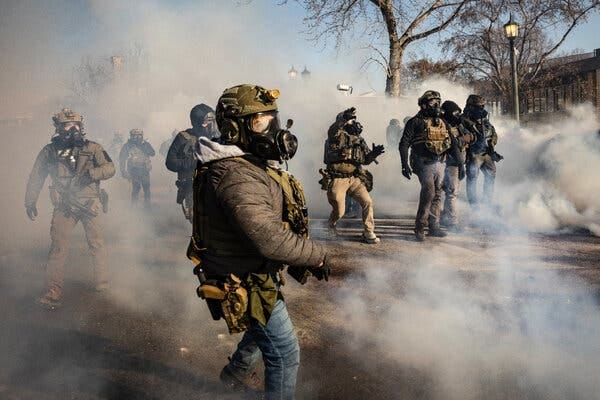
Photo: Minnesota (David Guttenfelder/The New York Times)
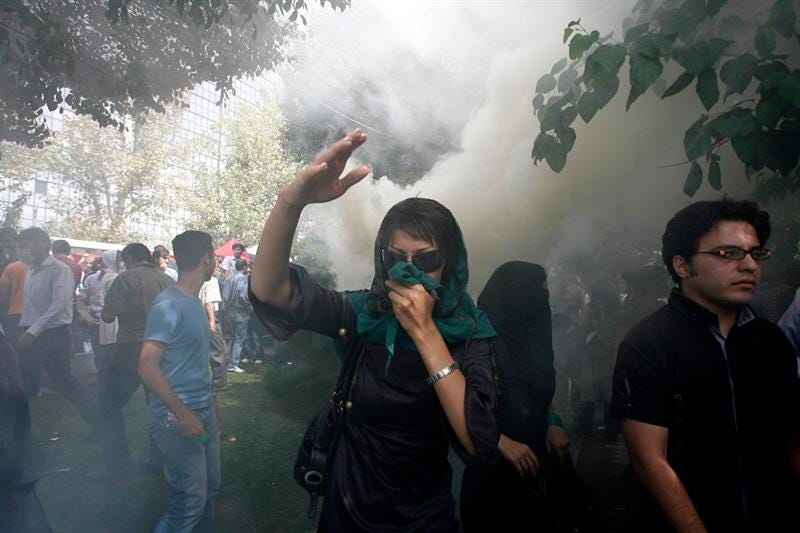
Photo: Tehran (via Ahram)
Frankly, coming second to Iran on the scale of violent repression is not a good look for the America that I’m sure many of us used to love. What has also struck me recently has been the constant barrage of White House attacks on Trump’s media critics; on the constant threats of lawsuits, the demands for billions of dollars in supposed damages, the introduction of social media checks for tourist visa applicants (national security? Really?). And only this week Trump threatened to sue a comedian for telling a joke he didn’t like.
I’ve lived and worked in two countries under constant pressure from the authorities to toe vaguely defined lines of “balance” and “fairness” – which most decent journalists at least a take a stab at, even when the evidence is patently unbalanceable.
I spent two years in South Africa under apartheid. Everything I wrote was checked either by the South African embassy in London or a team at the Ministry of Information. Every now and then I was called to Pretoria for a ‘friendly’ chat. But I always made sure I could point to evidence that I had tried to present the Afrikaner view of inexcusable racial segregation.
The second country was Iran, where I once wrote a story about the unsettling experience of being summoned by the authorities for a discussion of everything I’d written. I looked up that story this week. I was not long into my second visit when the newly-named Ministry of National Guidance called. A West German television crew had just been kicked out; the BBC and the Financial Times were also sent packing. American reporters were no longer welcome.
I was met politely at the ministry by civil servants who were plainly holdovers from the Shah’s regime, but now had to conceal their Anglophilia.
They had no specific problem with the Daily Telegraph, they explained, but too many in the western media were guilty of a “failure to recognise that Iranian culture is different”.
“Take the bikinis,” I was told by Mr Majid Rahimian, deputy director of the Foreign Press section at the Guidance ministry. Iran had recently banned bikinis. “When these were banned there were headlines in the West saying basic human rights were disappearing. But in Iran only 5-10 per cent of people ever wore bikinis and the vast majority were deeply insulted by the sight of them. Why should we be criticised for having a different culture?”
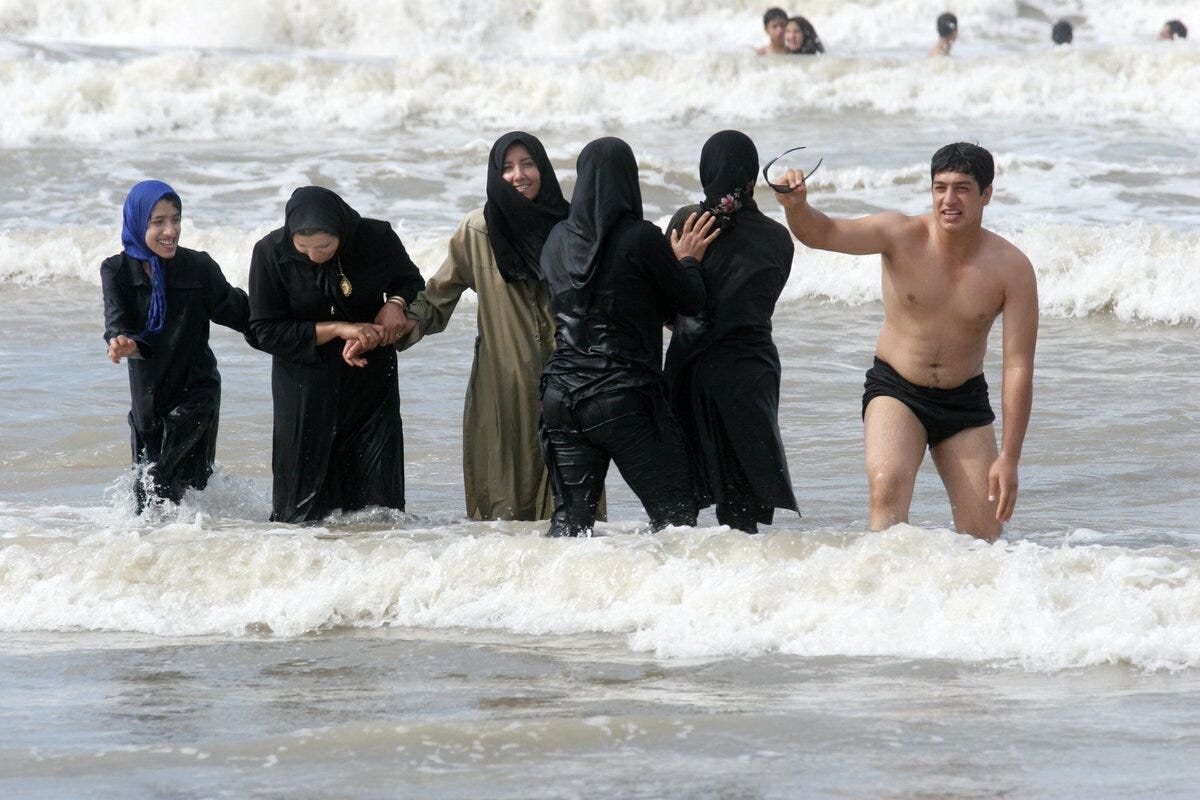
Photo: Hitting the beach in modern Iran (via iMedia, photographer unknown)
There was much more of this ilk. What strikes me now is not any fear that Donald Trump is about to ban bikinis – he’s more likely to make them compulsory wear for White House duties. It’s that insidious pressure on the media. We’re watching you. We know what you write. And we’ve got the power to stop you.
How often have we seen that in America in the past year? Trump sued both CBS News and ABC news for purported slights, and raked in $30+ million in settlement pay-offs. He’s suing the Wall Street Journal over their discovery of his crude Epstein birthday card. He’s claiming $15 billion from the New York Times for being nasty to him. He’s suing Rupert Murdoch, ffs. He hates late night comedians and tried to force Jimmy Kimmel off the air. Now he’s after Trevor Noah (aka “a total loser”) for making Epstein jokes while hosting the Grammy awards.
This is the real Donald, by the way – grasping, conniving, obsessed with money, always looking for a way to screw an easy settlement out of a victim who’d rather pay-up than be dragged into years of legal sparring. He has turned the American presidency into the world’s most successful protection racket. Idi Amin would have loved him.
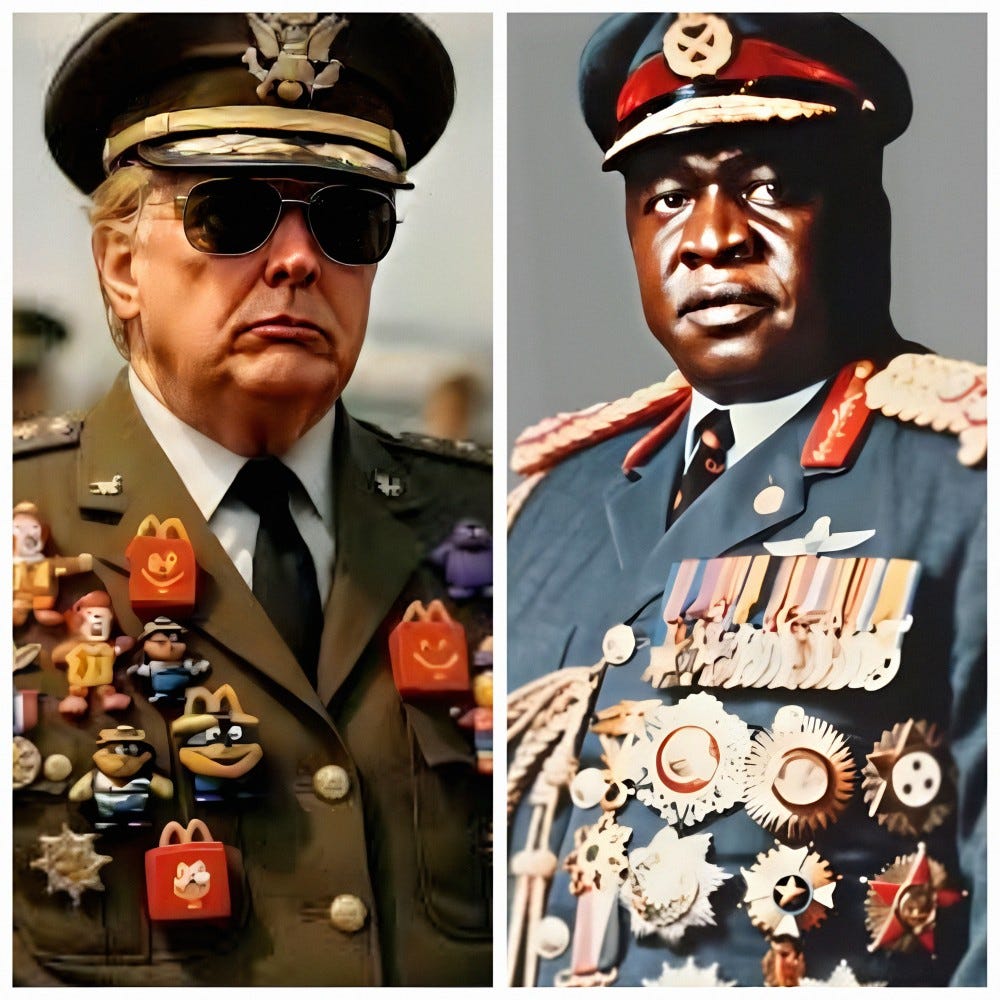
So would the Ayatollah.
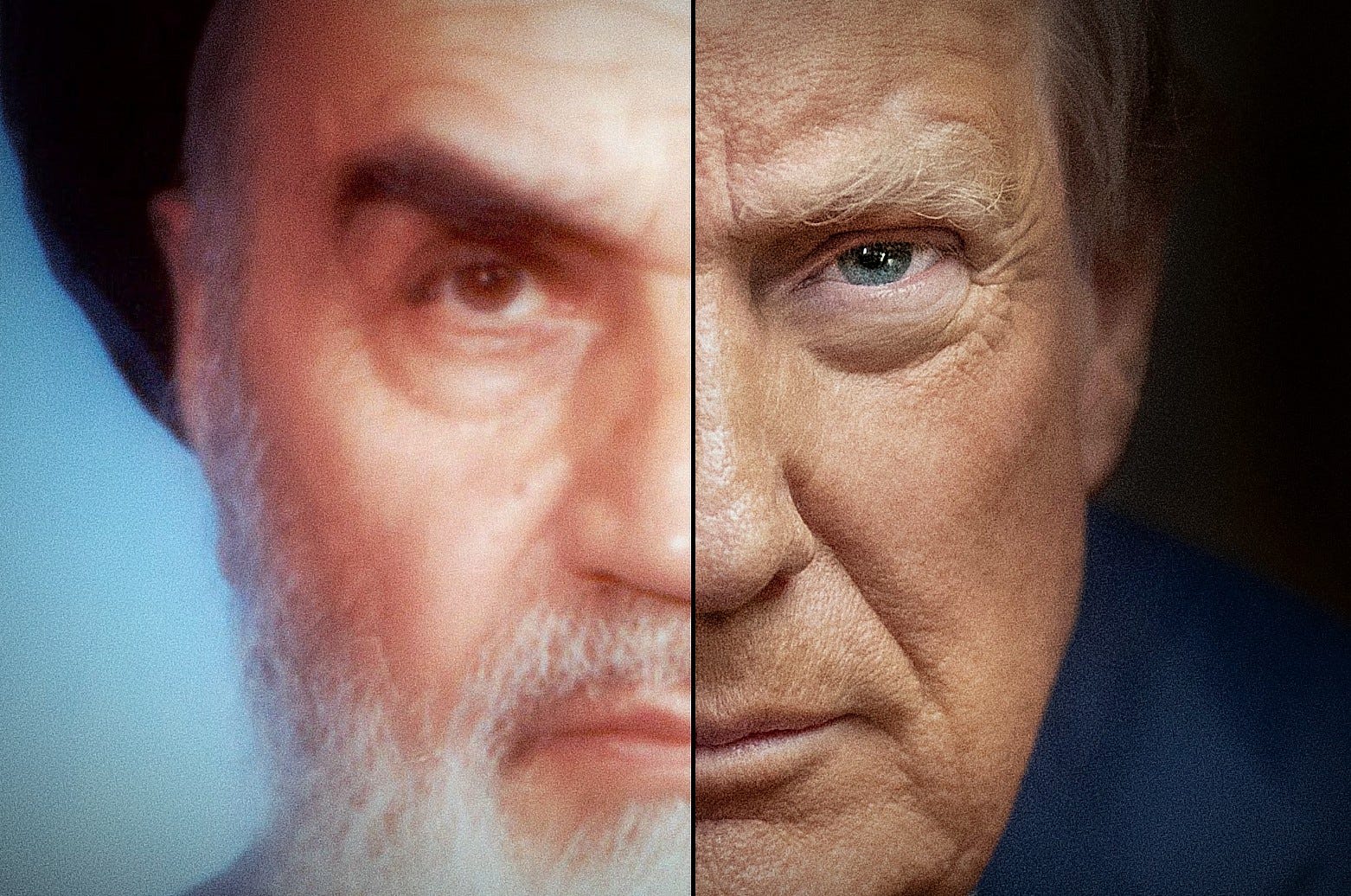
Khomeini didn’t care much for money, but he would have admired Trump’s treatment of his critics. Soon after my visit to the Ministry of National Guidance, I reported on a speech by Khomeini, who was preparing to assume official control of a theocratic state with a new Islamic constitution replacing the monarchy of the Shah.
Khomeini threatened to “obliterate” opponents of his new constitution, blasted left-wing secular parties, sucked up to the military and hailed the merger of religion and politics. “Islam is a political faith and worship is political,” quoth the ayatollah. To which one of his minions added: “Opposition to the government will be regarded as a sin in the eyes of God”.
Remind you of anywhere you know?
*I am unlikely to be persuaded to expand on my disasters, but $15 billion might change my mind.
Who was your "old university friend who was conducting a study of baboon migration in a wild corner of the Kenyan bush"? I might know her.
My foreign forays were far fewer and less heavy-duty than yours, Tony, but you've awakened telephone memories - 'It's only a few inches on the map, old boy'... 'What are your plans for Christmas? Do you have family? Do you have Italian?'....Our triumphs were public but our embarrassments are all our own, and should stay that way (unless, of course, they're funny)...